

- You are here :
Valentine's Day
- Published on : 14-02-22
- Category :
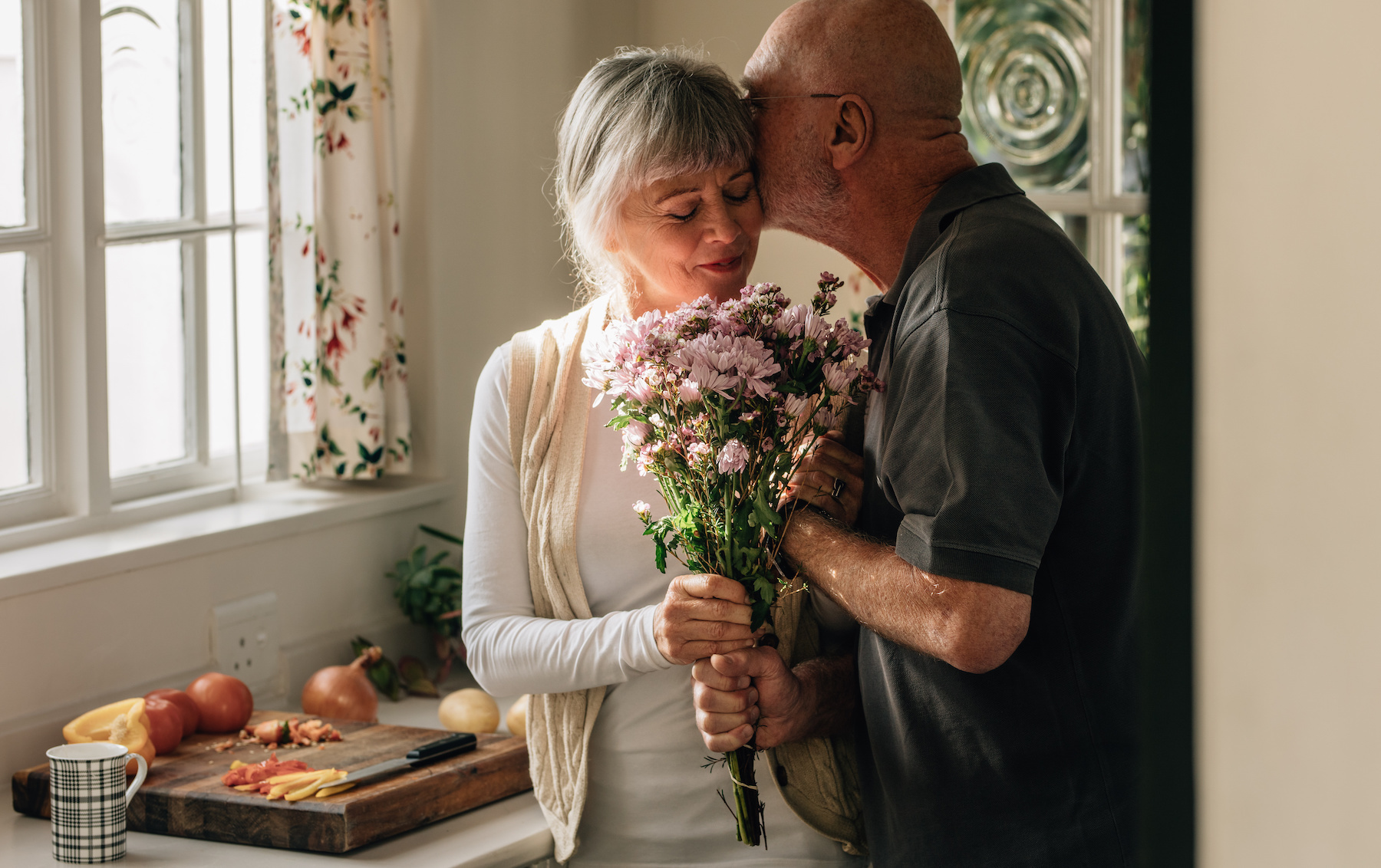
Age and experience allow us to change our view of relationships. We grow in wisdom and experience. One of the colours of love is tenderness. From birth to death, tenderness has its place in life, and is the attitude of love that spans all ages.
Bourvil sang and reminded us:
"You can live without wealth
Almost without a penny
Lords and princesses
There aren't many left
But to live without tenderness
We couldn't
No, no, no, no
We couldn't"
How right he was! In fact, scientists have proved that expressing tenderness leads to the production of oxytocin, the love and pleasure hormone. We must not confuse tenderness with feelings: tenderness is an action, an attitude that makes it possible to express and build a feeling, that of love.
Do we know how to be tender?
Sharing tenderness means not only listening to your partner's deepest needs, but also expressing all the affection you feel for them through a gesture, a look, an expression of attention or a word.
According to Jacques Salomé in his book "Apprivoiser la tendresse": éditions "j'ai lu", 1999.
Experiencing tenderness implies :
- being present in the present: I'm really here, close to you, I can see you, I'm listening to you. My thoughts are present to you.
- being attentive to the other person: my only occupation at the moment is to focus on you, without thinking about my own needs.
- Confirmation of the other person, when they feel that they are welcomed, recognised, valued and accepted.
- closeness, which allows all the languages of tenderness to come into play: glances, emotional vibrations and the circulation of emotions.
"In the end, tenderness presupposes a freedom of being in both the giver and the receiver. It is this freedom of being that I wish for everyone.
"We shall grow old together" from : "Toute une vie d'amour" by Jacques and Sophie Mercier, published by Academia, L'Harmattan, 2016.
"When we have weathered so many storms and emerged more or less unscathed and healed, the couple arrives at the most graceful moment of their lives, able to savour the present moment, with all their acquired wisdom.
Love has moved a little further away from Plato's Eros to take on a deeper, more accomplished form. Loving who we are rather than who we would like to be. Our maturity has taught us to take care of ourselves and relieve ourselves of our needs. In this way, our relationship with others is healthier, because everything that is exchanged is received as a "gift".
Dreams of princes and princesses are over, the partner is loved despite all his or her flaws and with all his or her strengths. Each of us can be him or her.
The stability of the relationship has also brought an appreciation of its individualism as much as of conjugality...
The golden age of love for two is about being together without needing to be, just because it's right, it's chosen, and taking the time to feel it."
A tender Valentine's Day to you!
